

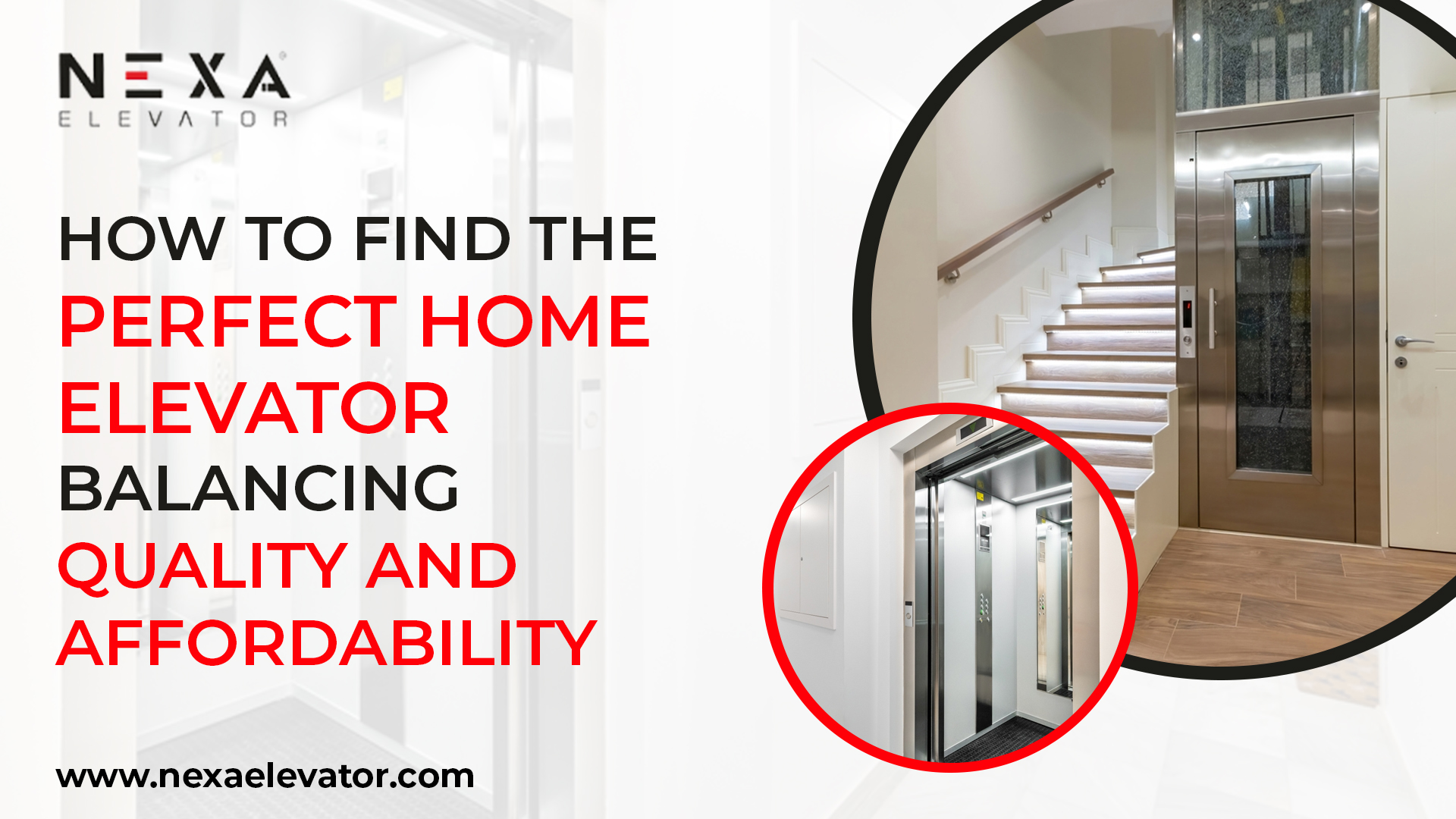
Modern homes are becoming more vertical, with multiple floors being used for bedrooms, living areas, parking, entertainment spaces and terraces. As homes grow in height, moving between floors can become less convenient, particularly for elderly family members, people with mobility requirements and families carrying luggage or household items.
This is where home lifts can become an important part of residential planning.
A home elevator is not simply a transportation system between floors. It can be planned as an integrated part of the building, considering available space, lift capacity, accessibility, safety, interior design and long-term usage.
Nexa Elevator provides home lift solutions where factors such as available space, lift type, design, safety features and ease of operation can be considered during planning. Nexa Elevator
Home lifts are elevators designed specifically for residential properties. They provide vertical transportation between different floors of a house and can be designed according to the available space and requirements of the building.
Unlike a conventional commercial elevator installation, a residential lift needs to work naturally with the home's architecture and everyday lifestyle.
Depending on the building design and technical requirements, homeowners may need to consider options such as pit or pit-less installation, machine-room or machine-room-less configurations, hydraulic systems and traction-based systems. The appropriate configuration depends on the property and installation requirements rather than a single solution being suitable for every home. Nexa Elevator
The purpose of installing a home lift can be different for every family.
For some homeowners, it is primarily about accessibility. For others, it can provide convenience when the house has multiple floors.
A home lift can help with:
Residential lift planning can also consider future accessibility needs rather than focusing only on the family's current requirements.
Before selecting a home lift, the first step should be understanding the building.
The available space, number of floors, floor-to-floor height, proposed lift location and structural conditions can all influence the installation.
Important questions include:
Planning these details early can help the elevator manufacturer recommend a suitable configuration.
Nexa's existing home-lift guidance also highlights the importance of evaluating the available space and identifying the appropriate lift location before installation. Nexa Elevator
Not every home has the same requirements.
A lift for a compact independent house may have different requirements from a lift installed in a large multi-floor residence.
For example, homeowners should consider:
Number of users:
How many people are likely to use the lift at the same time?
Frequency of use:
Will it be used occasionally or throughout the day?
Floor configuration:
How many levels need to be connected?
Accessibility:
Does the lift need to accommodate elderly users or wheelchair users?
Space availability:
How much space can be allocated for the installation?
These factors help determine the appropriate lift configuration.
Space is one of the major considerations when planning a home lift.
Modern residential elevator solutions can be designed around the available architecture. Depending on the technology and building conditions, homeowners may have options involving different shaft, pit, overhead and machine-room arrangements.
For homes where space is limited, discussing pit-less or machine-room-less configurations with the elevator manufacturer can be useful. However, the feasibility depends on the specific building and technical requirements. Nexa Elevator
The objective should not simply be to find the smallest lift. Instead, the goal should be to find a configuration that balances space, safety, capacity and usability.
A home lift may become an important part of everyday family life, so safety should be considered before decorative features.
Depending on the lift system, residential elevators can incorporate features such as:
Nexa's home-lift specifications specifically highlight features including emergency stop and backup power, safety sensors, automatic doors and user-friendly controls. Nexa Elevator
Homeowners should also discuss applicable installation requirements, certifications and local regulatory compliance with the elevator manufacturer before beginning installation.
Accessibility is an important reason many homeowners consider installing a residential lift.
A staircase may become difficult to use for:
When planning the lift, consider the size of the cabin, door arrangement, controls and access to each floor.
Accessibility requirements should be discussed during the design stage rather than after installation has already started.
A residential lift does not necessarily have to look like a commercial elevator.
The cabin and external design can be planned to complement the architecture of the home.
Depending on the selected model, homeowners may consider:
Nexa's home-lift information also identifies customizable interiors as one of the available considerations for residential lift solutions. Nexa Elevator
The design should enhance the home without compromising the technical and safety requirements of the lift.
A home lift operates in an environment where people live, sleep and spend their daily lives.
Therefore, noise and smooth operation can be important considerations.
For residential applications, homeowners can discuss:
Quiet operation is specifically listed among the common considerations for Nexa's home-lift solutions. Nexa Elevator
A home lift is a long-term addition to a property.
When planning one, it can be useful to think beyond the family's current needs.
For example:
Today:
The family may primarily use the stairs.
Later:
Older family members may find stairs more difficult.
In the future:
Accessibility requirements may change.
Planning the lift around long-term residential needs can make the investment more useful throughout the life of the property.
This is particularly relevant for homeowners who intend to remain in the same house for many years.
The initial price is naturally an important part of the decision, but it should not be the only consideration.
Homeowners should evaluate the complete installation requirement, including:
Two lifts may have different prices because their specifications, technologies and installation requirements are different.
A proper site assessment can help homeowners understand what configuration is actually suitable for their property.
Selecting the right elevator company is an important part of the project.
The company should be able to assist with the process from initial site assessment through installation and after-sales service.
Before finalizing a home lift, homeowners can ask:
Nexa Elevator's residential and home-lift information emphasizes consultation with elevator specialists to assess the property and identify a suitable solution. Nexa Elevator
A well-planned home lift can make a multi-floor house more accessible and convenient while becoming a natural part of its architecture.
The right solution depends on several factors—not just the lift itself. Homeowners should consider the building layout, available space, number of floors, users, accessibility requirements, safety features, design preferences, technology and long-term maintenance.
Instead of selecting a home elevator based only on appearance or price, it is better to begin with a professional assessment of the property and then select a configuration that matches the home's actual requirements.
If you are planning a new home or looking to add a lift to an existing property, Nexa Elevator can help you evaluate the available options and plan a residential lift according to your space and requirements.